Community Corner highlights the work of Seattle Human Services’ community partners. Our goal is to gather stories and photos that illustrate their amazing work on behalf of the people of Seattle.
This month, we are spotlighting the Victim Support Team, a volunteer-led program of HSD that celebrates 30 years in 2026. Since 1996, approximately 1,200 community volunteers have provided compassionate and non-judgmental support to survivors of violent crime — particularly domestic violence — and their children.
For more on the Victim Support Team, check out this video produced by the Seattle Channel for the program’s 30th anniversary.
Filling a critical gap
The Victim Support Team (VST) began in 1996 under the Seattle Police Department (SPD). It was created to address a critical gap: the time between the initial police response and when a survivor connects with longer-term services. After officers secure the scene, VST volunteers can step in and offer a wraparound support system that police often do not have the bandwidth to provide. This is especially crucial on weekends, when other community-based supports may not be available.
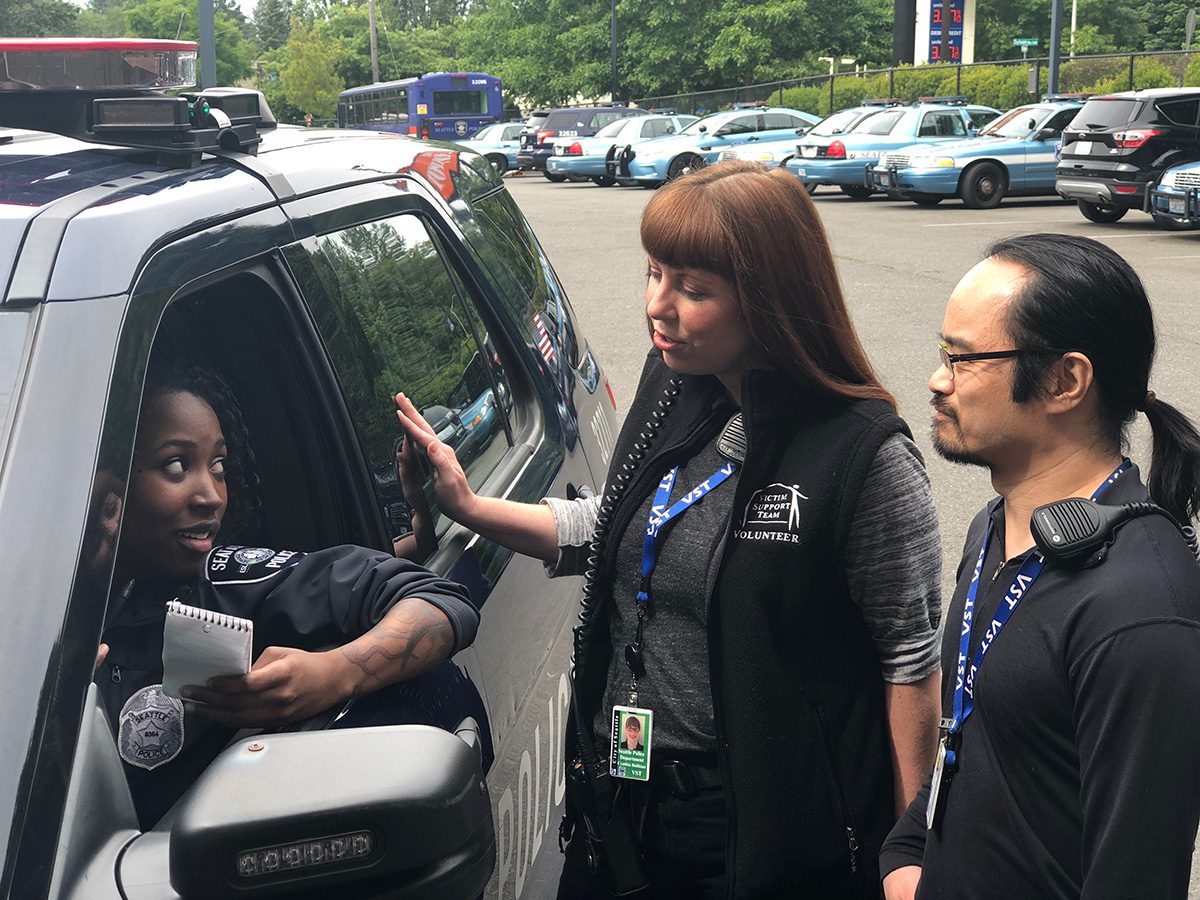
“VST’s partnership with police specifically is absolutely unique because of the follow up they do right after a scene happens, especially on weekends,” said SPD Sgt. Melody Rios, who is also a former VST volunteer. “We can do a hand-off from officers to (VST) so victims aren’t left alone.”
In the past three decades, dedicated community volunteers have generously given their time, energy, and compassion to the VST program. They come from all walks of life and undergo 60-plus hours of training in domestic violence dynamics, trauma-informed advocacy, and the legal system before meeting with survivors. No prior experience as a first responder or social worker is required.
Advocacy in action
Each year, VST volunteers assist roughly 1,000 survivors and complete thousands of advocacy actions. Sometimes these actions look like helping them find somewhere safe to sleep that night or getting them a new phone or a grocery card. Other times it’s following up with them in the days after an incident and establishing a connection that will eventually lead to long-term stability.
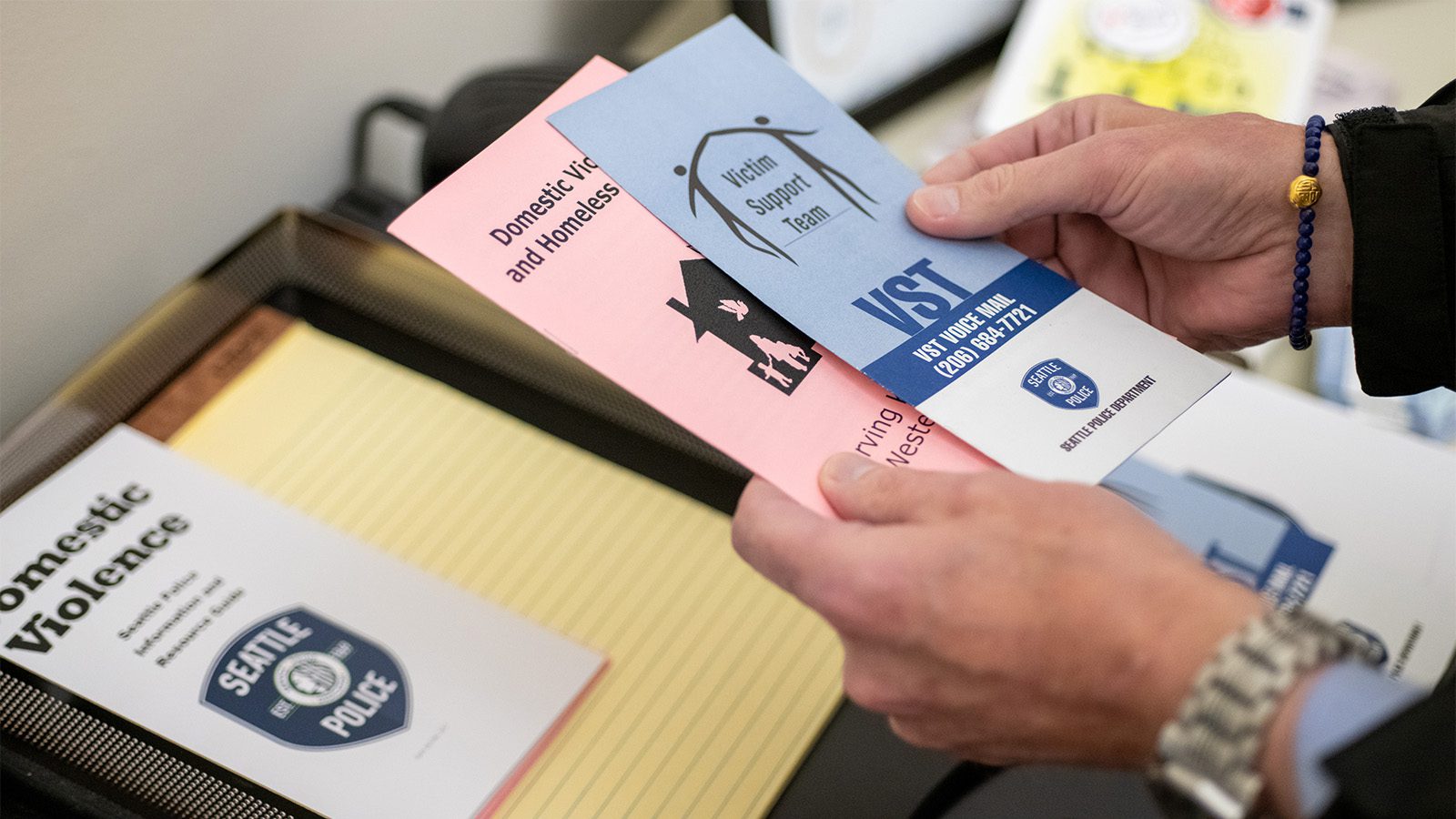
One VST volunteer, Heather S., recalled a shift when she was able to inform a survivor of her abuser’s upcoming release from police custody, and offer her a safe place to stay, instead of waiting for him to return to her home. “It was so powerful to have that opportunity to offer someone another path,” Heather said.
Originally created to respond to domestic violence, VST expanded its support to survivors of sexual assault, stalking, and human trafficking. The team moved to HSD in 2020, amid conversations in Seattle and across the U.S. about the structure of emergency response and the push to incorporate more community-based systems. Following the departmental switch, VST remains closely tied to SPD.
“The way VST is structured today helps establish an important connection between HSD and SPD,” said HSD Director Tanya Kim. “These connections allow us to bridge gaps and provide a coordinated response that is stronger than any one program could offer alone.”
A ripple effect
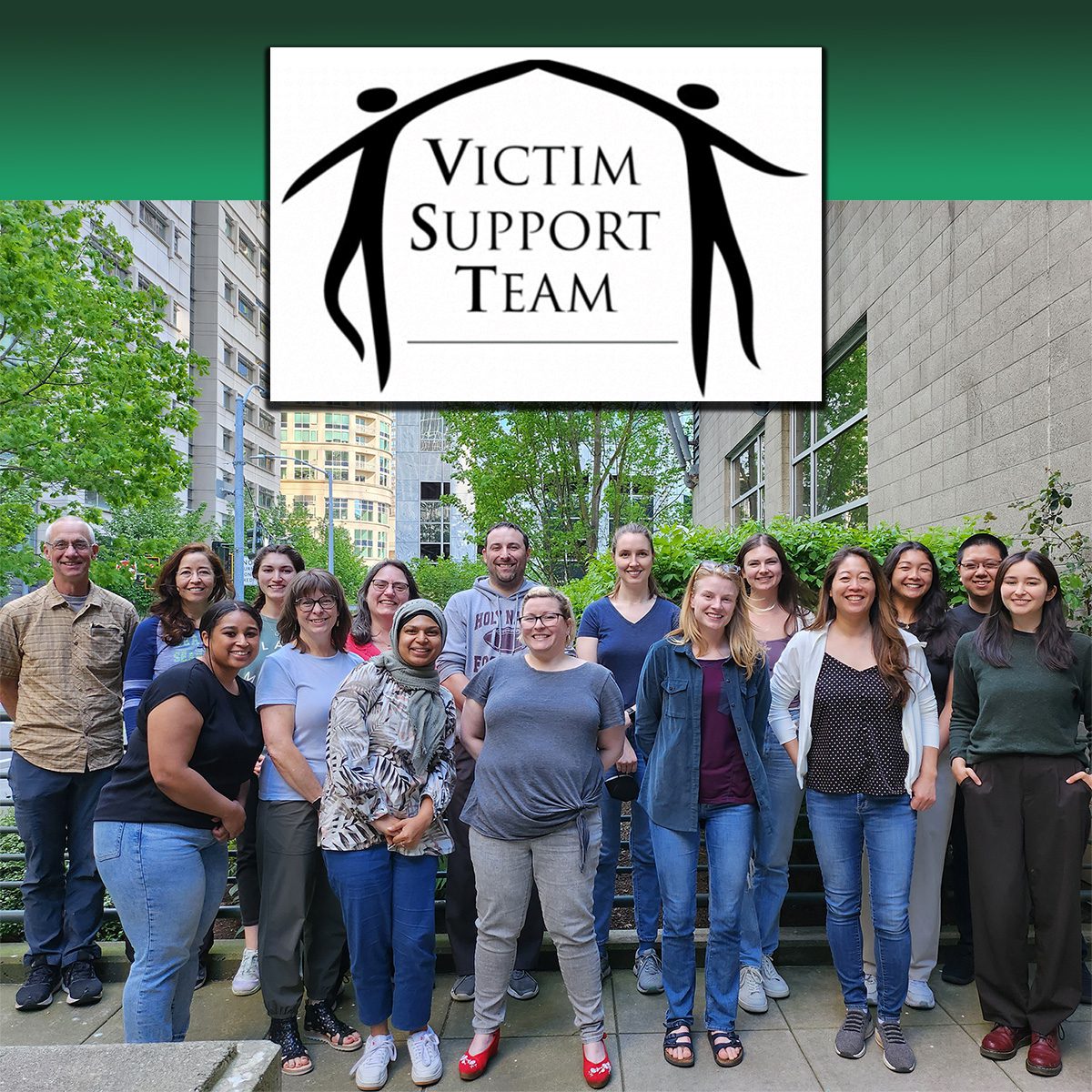
Volunteers are at the heart of VST. A new class is recruited each year to join the team, bringing with them different backgrounds and life experiences. Some stay with the program for only a short time, while others continue the work for decades.
No matter how long they remain a VST volunteer, the training and experiences they gain stay with them. Many go on to pursue careers in the legal system, healthcare, and community-based advocacy. Everyone who completes the program gains new insights and perspectives that can help them advocate for others in their homes, workplaces, and communities.
For some volunteers, their experiences with VST are part of a longer journey. In 2016, Tai D. first encountered VST as a survivor. Three years later, Tai returned to the program — not as the person receiving support, but as someone showing up with empathy, care, and resources when it matters most.
Reflecting back on her history with VST, Tai says that first interaction had a ripple effect that continues today: “The support I received in that moment changed my life.”